Alberto Repetti Artist

Artworks of Alberto Repetti's Artist, Oil Painting, Ballpoint Pen Drawing and more

Category Archives: artwork

Painting over a randomly obtained background

0

I present two small acrylic landscapes, the result of a fun practice that involves creating shapes by intervening on a random layer of paint, as you can see in this video, organized into steps: first the preparation and choice of colors, then the random application of color on the cards, then viewing the result card by card, and finally the conscious painting on two of the resulting colored cards.

When I say “chance,” of course, I don’t mean the artist’s total absence, but rather the degree of intervention we choose to have on the work we create.
It’s clear that even when we paint abstractly, or when we throw paint onto the canvas, what emerges is always the artist’s intention, even if it’s involuntary. I can throw paint, but the gesture is mine; however, the color can escape me, expand more than expected, create shapes I hadn’t imagined.
Here, however, I want to try a different experience: I want to place the paint on the sheets of paper completely randomly, without seeing it, and therefore completely without my knowledge. The colors will be mixed without my direct control, and the final result will serve as a starting point for observing how this can be possible if we deem it necessary to invent something from a random pictorial expression.
The result we’ll achieve in the two paintings I’ll make, based on the suggestion of random shapes, stems from this very process.
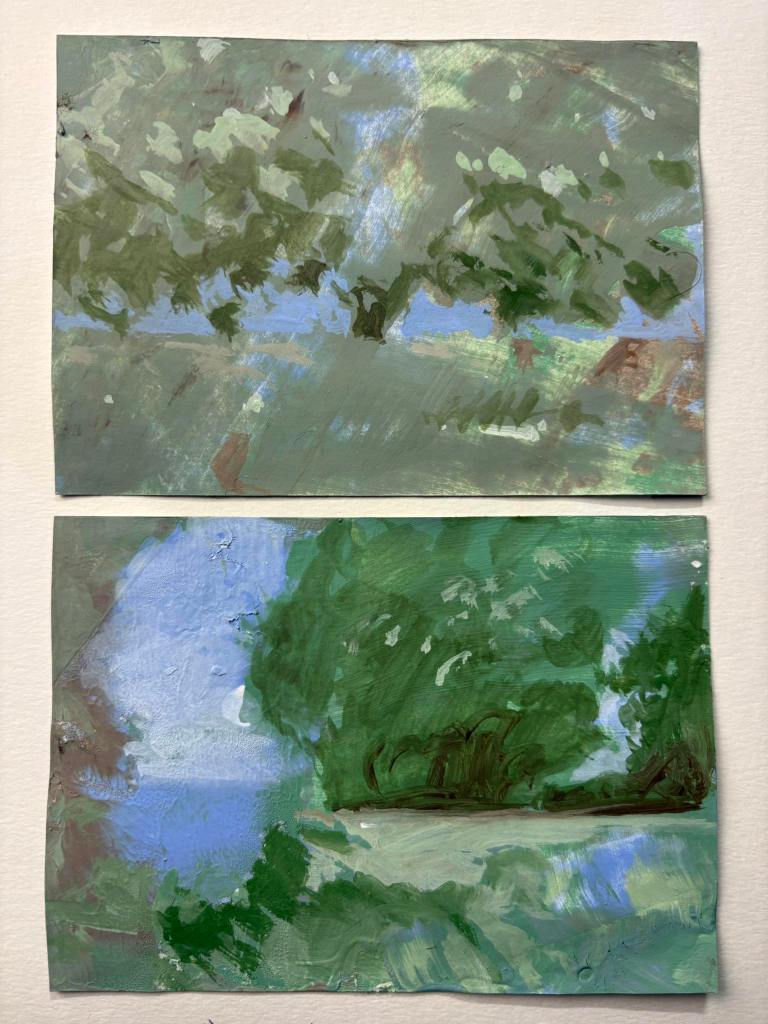
Acrylic on Cardboard, 14,8 x 10,5 cm
The Metal Stylus for Drawing

0

I would like to present two videos.
In the first, a Pininfarina pen in Ethergraf, which leaves a beautiful trace of oxidized metal on the paper so that you can draw.
The material with which it was designed and made is solid walnut wood and aluminum.
The pen is very well balanced and allows you to act on the Ethergraf tip with great ease and fluidity.
But to enhance itself effectively, the pen needs adequate support and it is in the second video that I propose a suitable paper preparation to enhance these characteristics.
On this prepared paper any metal stylus has the possibility of achieving greater darkness and therefore a greater artistic performance.

Gust

2

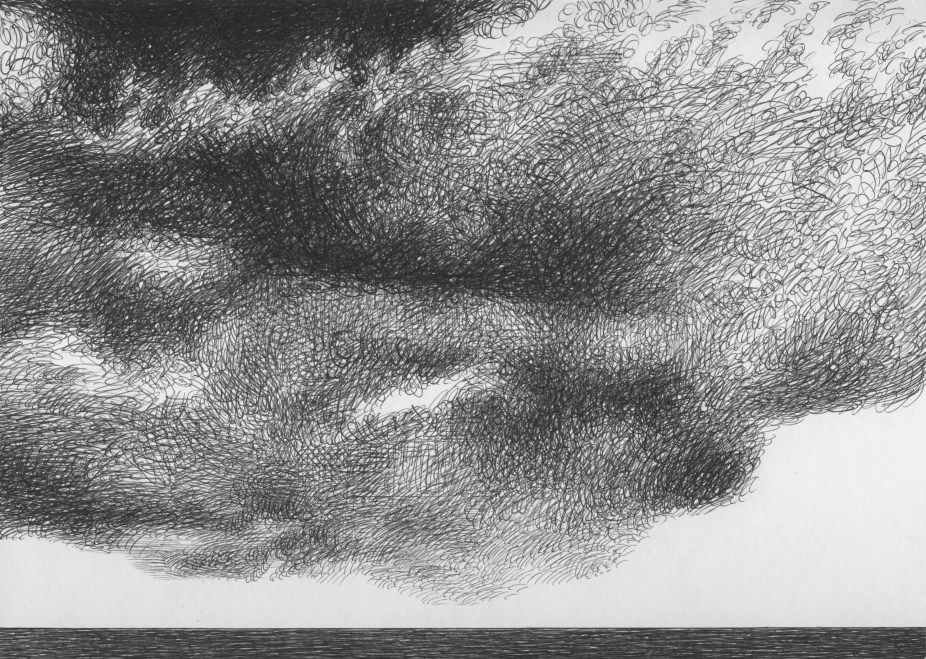
Ballpoin Pen on Cardboard, 29,7 x 21 cm, August 2025

“Out of the Nest”, biroscape #331

0

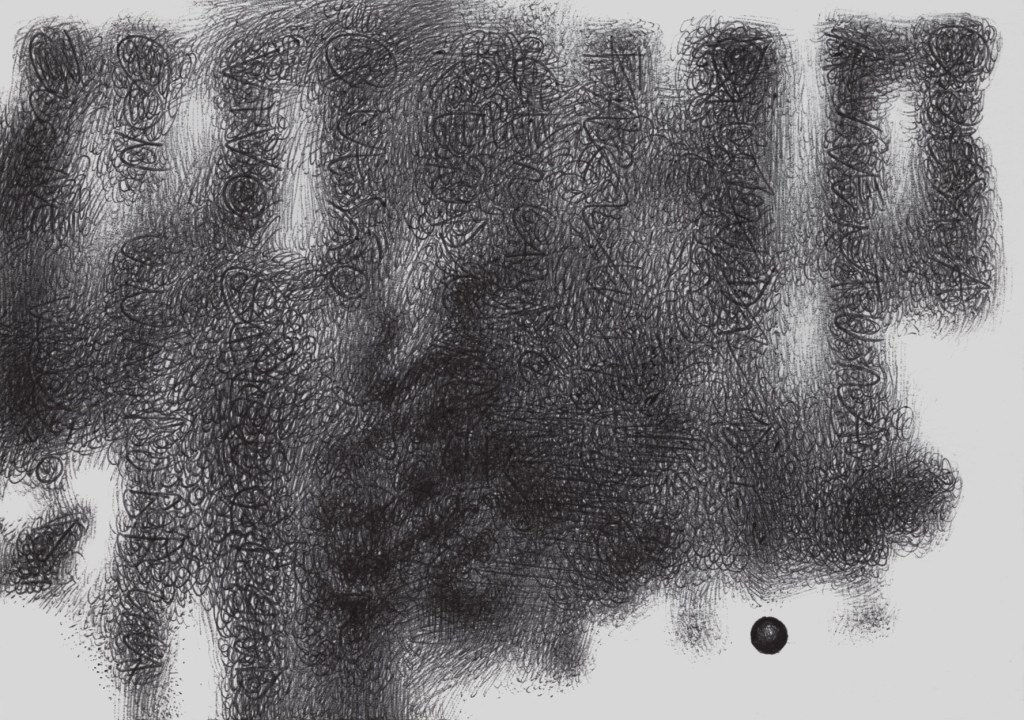
Ballpoint Pen on Cardboard, 14,8 x 10,5 cm, june 2021

Abstract drowing with a cross hatching that can represent a web o a nest not focused and in right low a little black ball completely in focus

Be Our Audience

0

The vision of an artistic object on the part of the person who performs it sometimes involves a loss of attention on its formal construction. Losses of attention, sometimes due to excessive emotional involvement, sometimes hide any problems with the overall structure of the work.
In this regard I have to give two tips as old as the world.
The first, and most obvious, is to hide the work and look after it at least three days later, better if these three days may have been occupied by on another artwork, and the second that is to observe, the next day, the work that we are doing in the mirror.
The return of the specular image allows us to immediately have an estrangement about the artwork, giving us the opportunity to verify its compositional structure and its balance, both in terms of colors and shapes. We need to become, for a moment, necessarily our audience.

La visione di un oggetto artistico da parte della persona che lo esegue a volte comporta una perdita di attenzione sulla sua costruzione formale. Perdite di attenzione, a volte a causa di un eccessivo coinvolgimento emotivo, o a volte perchè  nascondono eventuali problemi con la struttura complessiva del lavoro.
A questo proposito, devo dare due consigli vecchi come il mondo.
Il primo, e il più ovvio, è nascondere il lavoro e occuparsene almeno tre giorni dopo, meglio se questi tre giorni potrebbero essere stati occupati da un’altra opera d’arte, e il secondo è quello di osservare, il giorno successivo, il lavoro che stiamo facendo allo specchio.
Il ritorno dell’immagine speculare ci consente di avere immediatamente un allontanamento sull’opera, dandoci l’opportunità di verificare la sua struttura compositiva e il suo equilibrio, sia in termini di colori che di forme. Dobbiamo diventare, per un momento, necessariamente il nostro pubblico.